

Two-Year Delay Confirms Political Liability of Costly Climate Mandate
The Massachusetts Fiscal Alliance today criticized the Healey administration for quietly delaying implementation of the Clean Heat Standard until January 1, 2028. The new energy tax would raise heating costs first on households using natural gas, oil, or propane, and would eventually be applied to electric heating. The delay ensures the policy will not take effect until after the 2026 gubernatorial election and during the first full winter of Governor Maura Healey’s second term.
Originally scheduled to begin in 2026, the Clean Heat Standard is a regulatory mandate designed to force consumers away from traditional home heating fuels and into electrification as part of the state’s Net Zero by 2050 agenda. Independent analysis estimates the policy would increase annual home heating costs by $255 to $425 per household, with the heaviest burden falling on working families, seniors, and small businesses.
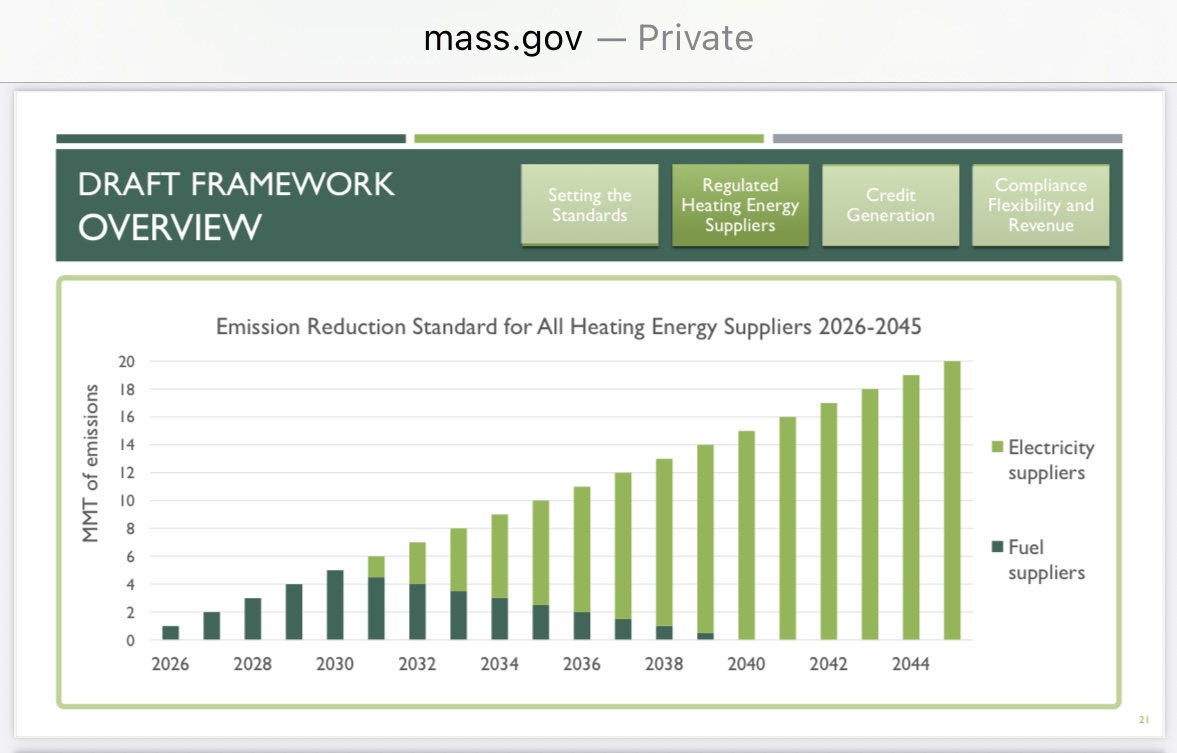
Source: MassDEP Presentation on Original Clean Heat Standard Timeline: https://www.mass.gov/doc/presentation-framework-technical-session-slides/download
“This delay says everything Beacon Hill doesn’t want to admit. If this policy were truly popular and affordable, the governor wouldn’t be pushing its implementation past an election. They know voters are already furious about energy costs, and they don’t want to answer for another mandate that is going to make heating your home drastically more expensive,” said Paul Diego Craney, Executive Director of the Massachusetts Fiscal Alliance.
MassDEP notified industry stakeholders of the delay in a December 23, 2025 email, citing the need to evaluate affordability trends and gather additional data. However, the agency has already been collecting detailed sales and emissions data from fuel providers for years, giving state officials a clear picture of how many households will be affected when the policy takes effect.
“The administration didn’t suddenly discover new information. They already know the costs. What changed is the political risk,” noted Craney.
The Clean Heat Standard requires fuel suppliers to provide increasing levels of so-called “clean heat” services or purchase credits from approved vendors, costs that are expected to be passed directly on to consumers. A study by Diversified Energy Specialists also found the mandate would disproportionately harm smaller, local fuel dealers while favoring larger companies and heat pump installers.
“Delaying this policy doesn’t make it any less harmful. It just hides the damage until after voters cast their ballots. The public deserves transparency now, not after another election,” said Craney.
The Massachusetts Fiscal Alliance called on Governor Healey to publicly disclose the full cost of the Clean Heat Standard, as well as the Net Zero by 2050 policy as a whole, and explain why a policy she claims is necessary and affordable is being postponed until after voters head to the polls.
“If the governor believes this mandate is the right path, she should defend it openly. Quietly delaying a massive new heating tax is an admission that the policy can’t survive public scrutiny. If she really wants to do right by her constituents, she should do what needs to be done and turn the Net Zero mandates into aspirational goals, not rigid requirements that will impoverish ratepayers,” closed Craney.
Copied below is a copy of the E-Mail notice sent out by MassDEP on December 23, 2025:
Dear Massachusetts Clean Heat Standard Stakeholder:
Clean heating technologies like heat pumps and geothermal heat loops present a tremendous opportunity for Massachusetts families and businesses. These technologies are the most efficient heating and cooling technologies on the market today and are increasingly the preferred option for consumers, having outsold gas furnaces in recent years. Used at scale, clean heating will save energy, increase affordability, improve health outcomes, and help Massachusetts reduce climate-warming pollution.
In 2022, in response to Governor Baker’s Executive Order, the bipartisan Commission on Clean Heat issued its recommendations to accelerate the deployment of energy efficiency programs and clean heating systems across Massachusetts. In November 2023, MassDEP published a Clean Heat Standard (CHS) Draft Framework, with emissions reduction and electrification requirements that would phase in gradually from 2026 to 2030. Since that time, MassDEP has held 13 public stakeholder meetings and reviewed more than 1,000 pages of written comments on the CHS Draft Framework. On November 22, 2024, MassDEP also finalized new emission reporting requirements for heating fuel suppliers.
A number of state agencies, including MassDEP, are working to ensure there is a robust market for affordable clean heat in Massachusetts, despite changing federal tax incentives. To allow sufficient time for those initiatives to take effect, and to inform development of a Clean Heat Standard tailored to the needs of Massachusetts residents, MassDEP now plans to phase-in this standard no earlier than 2028. The following steps will ensure ongoing progress:
· Evaluate New Fuel and Emissions Data – Fuel and emissions data reported under MassDEP’s new reporting requirements and under the Massachusetts Department of Energy Resources’ new Large Building Energy Reporting program will provide new information that can inform refinements to the CHS program design.
· Analyze Affordability Trends – Since the publication of the CHS Draft Framework, Massachusetts is offering new reduced electricity rates for heat pumps and there have been major changes to relevant federal tax incentives.
· Monitor Heat Pump Adoption – The CHS Draft Framework included building electrification in line with Mass Save in the early years of program implementation. MassDEP will monitor heat pump adoption rates with the goal of implementing a CHS that creates a market to spur further progress.
· Collect Additional Information – MassDEP will assess additional steps to support refinements to the CHS Draft Framework, including gathering more information about heating fuels.
MassDEP appreciates the ongoing participation of our stakeholders as we continue our work to expand access to clean heat and reduce air pollution from our buildings.
Massachusetts Department of Environmental Protection | 100 Cambridge St. STE 900 | Boston, MA 02114 US